▶ Listen to this article
OpenCode Go is a model subscription that costs a flat $10 a month, with no contract — you can cancel any time. It comes from the team behind OpenCode, and it exists to fix one specific problem: getting reliable access to good AI models without juggling a dozen provider keys.
The pitch is simple. The OpenCode team tests a curated list of open models, benchmarks each one against the provider hosting it, and sells you access to the whole lineup behind a single API key. Flat ten a month, no contract. No per-token math, no rate-limit roulette, no wondering whether the model you’re calling is still alive.
Here’s what you actually get: every model in the lineup, the exact request limits, and the real numbers on what ten dollars buys.
What OpenCode Go Actually Is
OpenCode Go is a flat-rate subscription. One API key, one endpoint, a curated line-up of open models. It’s the paid companion to the free OpenCode coding agent, but you don’t need the agent to use it — the API is a standard OpenAI-compatible endpoint that plugs into whatever you already run.
OpenCode markets Go toward developers, and the model list is benchmarked for agentic work. But here’s the thing the marketing undersells: these aren’t niche coding models. They’re the same general-purpose large language models people use for everything — writing, chatbots, research, summarization, data extraction, translation, automation. Qwen, GLM, DeepSeek, Kimi, MiniMax. They write code, but they also write articles, answer customer questions, and turn messy data into clean output.
So while the homepage says “coding models,” what you’re really buying is cheap, reliable access to good AI models. What you do with them is up to you.
The Pricing: a Flat $10 a Month
Every month is $10. There’s no annual contract, and you can cancel any time.
That also means the old “$5 first month” promo is gone — but the way to shave the cost is Go’s referral credit: share your referral link, a friend subscribes to Go, and you both get a $5 usage credit applied toward your Go usage limits. It’s a credit that keeps working every time you bring someone in, not a one-time signup discount.
But the part most people miss is the usage ceiling. The limits are:
- 5-hour limit — $12 of usage
- Weekly limit — $30 of usage
- Monthly limit — $60 of usage
You’re paying $10 a month. The monthly usage ceiling is $60. That’s the 6x multiplier OpenCode advertises — they buy reserved GPU capacity and bulk-discounted rates, then pass the savings through. For most models, the math works out to roughly six times what you paid.
Limits are measured in dollar value, not request count, because different models cost different amounts to run. A cheap model like MiMo-V2.5 gives you far more requests than an expensive one like GLM-5.2. Here’s the full table, straight from the OpenCode’s own docs (and our notes on the same page).
The Model Lineup: 33 Models Now (All of Them Listed Below)
| Model | Requests / 5h | Requests / week | Requests / month |
|---|---|---|---|
| Space Bunny Free | Unlimited | Unlimited | Unlimited |
| LongCat 2.5 Preview Free | Unlimited | Unlimited | Unlimited |
| Muse Spark 1.3 Contributor | 45,300 | 113,300 | 226,600 |
| Muse Spark 1.2 Contributor | 45,300 | 113,300 | 226,600 |
| MiMo-V2.6-Flash | 30,100 | 75,200 | 150,400 |
| MiMo-V2.5 | 30,100 | 75,200 | 150,400 |
| DeepSeek V4.1 Flash | 26,000 | 65,000 | 130,000 |
| DeepSeek V4 Flash | 13,000 | 32,500 | 65,000 |
| LongCat-2.0 | 11,400 | 28,600 | 57,200 |
| DeepSeek V4 Flash Vision Exp | 6,500 | 16,250 | 32,500 |
| GLM-5.3-Flash | 6,320 | 15,790 | 31,580 |
| Qwen3.8 Flash | 5,400 | 13,500 | 27,000 |
| Qwen3.7 Plus | 4,300 | 10,800 | 21,600 |
| Hy3 | 4,300 | 10,750 | 21,500 |
| GPT 6 Luna | 4,230 | 10,560 | 21,130 |
| MiniMax M2.7 | 3,400 | 8,500 | 17,000 |
| Qwen3.6 Plus | 3,300 | 8,200 | 16,300 |
| MiMo-V2.6-Pro | 3,250 | 8,150 | 16,300 |
| MiMo-V2.5-Pro | 3,250 | 8,150 | 16,300 |
| MiniMax M3 | 3,200 | 8,000 | 16,000 |
| GPT 5.6 Luna | 2,050 | 5,100 | 10,250 |
| Hy4 preview | 1,350 | 3,380 | 6,770 |
| Kimi K2.7 Code | 1,350 | 3,380 | 6,750 |
| Kimi K2.6 | 1,150 | 2,880 | 5,750 |
| DeepSeek V4 Pro | 1,050 | 2,600 | 5,200 |
| GLM-5.2 | 880 | 2,150 | 4,300 |
| GLM-5.1 | 880 | 2,150 | 4,300 |
| GLM-5.3 | 220 | 540 | 1,080 |
| Grok 4.7 | 169 | 423 | 845 |
| Grok 4.6 | 169 | 423 | 845 |
| Qwen3.7 Max | 170 | 420 | 840 |
| Qwen3.8 Max | 160 | 400 | 810 |
| Kimi K3 | 110 | 250 | 490 |
Read those top rows again. The MiMo V2.6 Flash and MiMo-V2.5 lanes each give you 150,400 requests a month, DeepSeek V4.1 Flash is back up to 130,000 after its boost returned, and even DeepSeek V4 Flash sits at 65,000. For a flat ten a month. That’s the “cheap model, tons of requests” end of the spectrum, and it’s genuinely hard to exhaust for a solo user.
The expensive end — Grok 4.7 and Grok 4.6 at 845 requests a month, Kimi K3 at 490 — is for when you need a heavy frontier model on a specific task. You don’t run those for everything. You run them when it matters, and the cheap models carry the routine work.
The lineup keeps growing. The newest arrivals are Grok 4.7 (which joins rather than replaces Grok 4.6), GPT 6 Luna, the MiMo V2.6 pair — Flash and Pro — and Space Bunny Free, plus LongCat 2.5 Preview Free — two free models OpenCode is running for a limited time. OpenCode now documents 33 models on the Go page; the API endpoint itself returns 43 ids, because extra lanes (a deepseek-flash alias, GLM-5, Grok 4.5, Hy3 preview, Kimi K2.5, MiMo V2 Omni and V2 Pro, MiniMax M2.5, Qwen3.5 Plus, and an undocumented stealth model listed as omen-alpha) are routable without ever appearing in the marketing table. Treat the documented 33 as the supported set — and if you value zero-retention guarantees, stay away from the unofficial ids entirely, since an undeclared model publishes no privacy row.
Worth knowing before you wire it into your own stack: Grok 4.6 is listed with its own limits and prices, but on the plain OpenAI-compatible endpoint it currently answers with an “endpoint is unavailable” error. It works through OpenCode’s own client; if you’re calling the API directly, pick one of the other models.
Why Some Models Give You So Few Requests
The 6x multiplier isn’t uniform. OpenCode is honest about this in their docs: for most models, bulk discounts and reserved GPU capacity make the 6x work. For a few — usually new models or ones already priced cheaply by their own provider — OpenCode hasn’t been able to negotiate a better rate, so the multiplier is lower.
Either way, you still get slightly more than paying the model provider directly. The $60 monthly ceiling is the ceiling, not the typical experience. Most people using a mix of cheap and expensive models will land somewhere in the middle and never touch the limit.
One detail that trips people up: the usage ceiling is per model, not one shared $60 pot. Most models carry the full $60, but the ones OpenCode couldn’t negotiate a bulk rate on are capped lower — GLM-5.3, Kimi K3, Grok 4.7, Grok 4.6, Qwen3.8 Max, GPT 6 Luna, GPT 5.6 Luna, DeepSeek V4 Pro, MiMo-V2.6-Pro, MiMo-V2.5-Pro and DeepSeek V4 Flash Vision Exp sit at $15 a month, while DeepSeek V4 Flash, Qwen3.8 Flash, Qwen3.7 Max and Hy4 preview sit at $30. DeepSeek V4.1 Flash is back at the full $60 while its boost runs, and Space Bunny Free carries no limit at all. Per model the 5-hour and weekly caps scale the same way: 20% and 50% of the monthly figure. It only matters if you plan to run one model for everything — check that model’s ceiling before you commit.
One more lever worth knowing: the DeepSeek models bill at half price outside peak hours, so the same monthly ceiling stretches roughly twice as far when your workload lands in the cheap window. Peak is 01:00–04:00 and 06:00–10:00 UTC on weekdays, and weekends are off-peak the whole way through. If any of your work is batchable, scheduling it outside those windows is free headroom on exactly the models most people lean on hardest.
Zero Data Retention (For Almost Everything)
The privacy table is short and unusually clean. Of the 33 models in the lineup, 27 carry zero-day data retention — your prompts and responses are not logged and not used for training.
The six exceptions are flagged plainly:
- Grok 4.7 and Grok 4.6 — 30-day retention, and enabling zero-data-retention disables some API features.
- GPT 6 Luna and GPT 5.6 Luna — abuse monitoring logs kept up to 30 days.
- Muse Spark 1.3 and 1.2 Contributor — the trade is explicit: heavily discounted tokens in exchange for Meta training future models on your prompts and completions. Not zero-retention, and not available in every region.
DeepSeek models have zero-day retention through an agreement renewed monthly — the current cover runs through September 30, 2026, so if that renewal ever lapses, this paragraph is the first thing to re-check. If you’re feeding proprietary content into a model, this is the table you should care about, and OpenCode actually publishes it.
Why Cheap, Reliable Model Access Matters for Everyone
If you run a website with an AI feature — a chatbot, a content generator, anything that calls a model — you already know the drill. You bring your own API key. The question is always which model to point it at, and what it costs per request.
If you’re a writer, a freelancer, a small business owner, or anyone who leans on AI for daily work, the same logic applies. You don’t want to think about which provider is throttling you today. You want one key, one price, and models that actually respond when you call them.
This is where the flat-subscription logic pays off. A flat ten a month for a curated line-up of tested models, with a $60 usage ceiling, beats juggling three free-tier keys that throttle you mid-job. Whether you’re writing content, answering customer questions, or building something that calls an API, predictable flat pricing beats per-token anxiety.
YakWP itself is built on the same philosophy — you own the plugin, you bring your key, there’s no recurring SaaS fee for the widget itself. The missing piece has always been the model access. A cheap flat-fee subscription closes that gap.
How I Use It
My setup routes different tasks to different models. Heavy reasoning goes to DeepSeek V4 Pro or GLM-5.3. High-volume writing, classification, and extraction go to MiMo-V2.5, where the 150K monthly requests mean I stop thinking about limits entirely.
The API is a standard OpenAI-compatible endpoint. Changing a base URL and an API key is the entire integration.
import openai

client = openai.OpenAI(
    base_url="https://opencode.ai/zen/go/v1",
    api_key="your-opencode-go-key",
)

response = client.chat.completions.create(
    model="deepseek-v4-pro",  # or deepseek-v4-flash, glm-5.2, qwen3.7-plus...
    messages=[{"role": "user", "content": "Summarize this document."}],
)
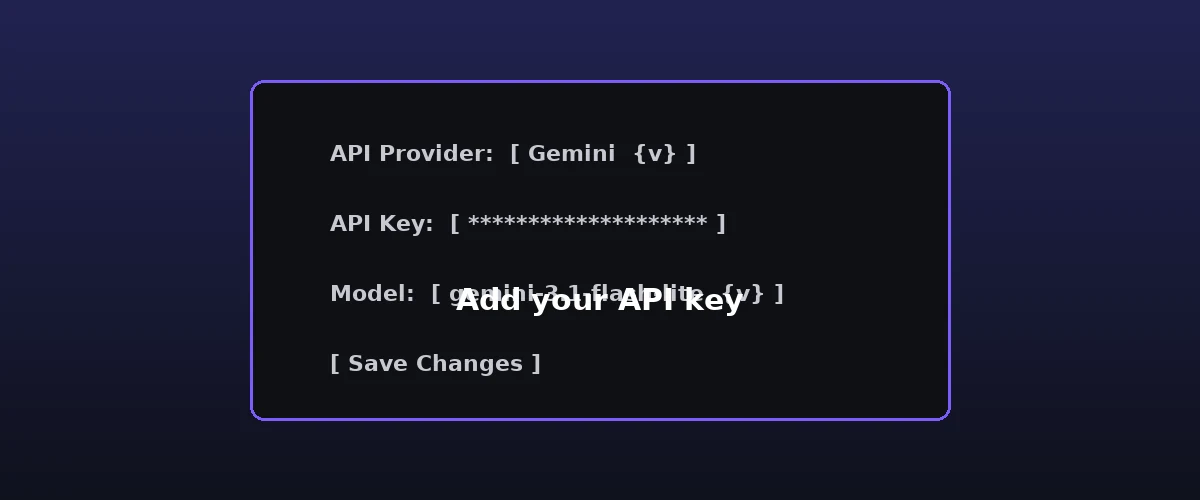
If you’re on OpenCode itself, you run /connect, pick OpenCode Go, paste the key, and /models shows everything available.
Sign up at opencode.ai/go — subscribing through my link gets you a $5 usage credit.
When Not to Bother
Three honest reasons to skip Go:
- You only need one model. If your entire workload is DeepSeek V4 Flash, you might be fine on a free tier somewhere. Go earns its keep when you want a mix of cheap fast models and expensive frontier models behind one key.
- You need a specific proprietary model. Go covers open models only. If your workflow is built around Claude or a specific GPT, this isn’t a replacement.
- You’re already happy with free-tier scavenging. If you don’t mind juggling keys and hitting rate limits, Go is a convenience you don’t need. It’s for people who’d rather pay $10 to try it than think about it.
What Changed Since the Last Update
Provider line-ups move, which is why this review gets re-checked against OpenCode’s own endpoints rather than left to age. Here is what changed since the previous version:
- The roster is up to 33 documented models. LongCat 2.5 Preview Free is the newest arrival — a second free, unlimited lane (262K context) running for a limited time, alongside Space Bunny Free. The privacy table grew with it: 27 of the 33 models now carry zero-day retention.
- The DeepSeek V4.1 Flash boost came back. The promotional ceiling that ended in September has returned: the model is back at a $60 monthly limit and 130,000 estimated requests a month, four times the standard lane. OpenCode runs these boosts on and off, so verify the ceiling on the day if you plan around it.
- One lane got tighter. Qwen3.7 Max halved, from 1,690 estimated requests a month to 840, and now sits in the $30 ceiling tier. Nothing else in the lineup moved.
The DeepSeek zero-retention agreement is renewed monthly — the current cover runs through September 30, 2026 — which is the part of this review that needs the most frequent verification.
FAQ
Is OpenCode Go the same as the OpenCode agent?
No. The agent is free and open-source. Go is a separate paid subscription for model access. You can use Go with any OpenAI-compatible client, not just OpenCode.
What happens if I hit the $12 five-hour limit?
Requests get rate-limited until the window resets. Your subscription isn’t cancelled and you’re not charged extra. If you have Zen credits, you can enable “Use balance” and it falls back to your balance instead of blocking.
Do the models get used for training?
For 27 of the 33 models, no. Data retention is zero days. Grok 4.7 and 4.6, GPT 6 Luna and GPT 5.6 Luna, and both Muse Spark Contributor models are the exceptions noted above — the last two train on your prompts by design.
Does the OpenCode v2 release change anything about Go?
No. Go is a subscription to a model endpoint, not a feature of the agent. Version 2 of the coding agent changed the app — new plugin and server APIs, a global config file — while the Go endpoint and your API key stayed exactly as they were. You can use Go with the v2 agent, the older v1 agent, or any other OpenAI-compatible client.
Are these models only for coding?
No. They’re general-purpose models. OpenCode benchmarks them for agentic work, but they handle writing, summarization, translation, chatbots, and data extraction just as well. The “coding” label is about how they’re selected, not what they can do.
How much does OpenCode Go cost?
$10 a month, flat, and you can cancel any time — there’s no contract and no first-month promo. The discount now runs through referrals: when a friend subscribes via your referral link, you both get a $5 usage credit toward your Go usage limits.
How do I sign up?
Sign in at opencode.ai/go, subscribe, copy your API key, and point your client at the endpoint above.
The Honest Bottom Line
A flat $10 a month for a curated line-up of open models, a $60 monthly usage ceiling, and a published zero-retention privacy table. If it’s not for you, cancel any time. And when you refer a friend who subscribes, you both get a $5 usage credit — so each referral trims the effective price.
If you’ve been fighting free-tier rate limits or juggling three API keys, this is the single subscription that replaces all of that. If you run an AI-powered website, it’s the cheap, predictable model access that makes your own BYOK setup actually affordable. I pay full price for mine and I don’t plan to cancel.
Want to try it? The discount now runs through the referral program. Subscribe through this link and you and I both get a $5 usage credit toward our Go limits: opencode.ai/go. It doesn’t cost you anything extra — and my own link already pulled in a run of sign-ups off a single Reddit post, so I can vouch that it converts.